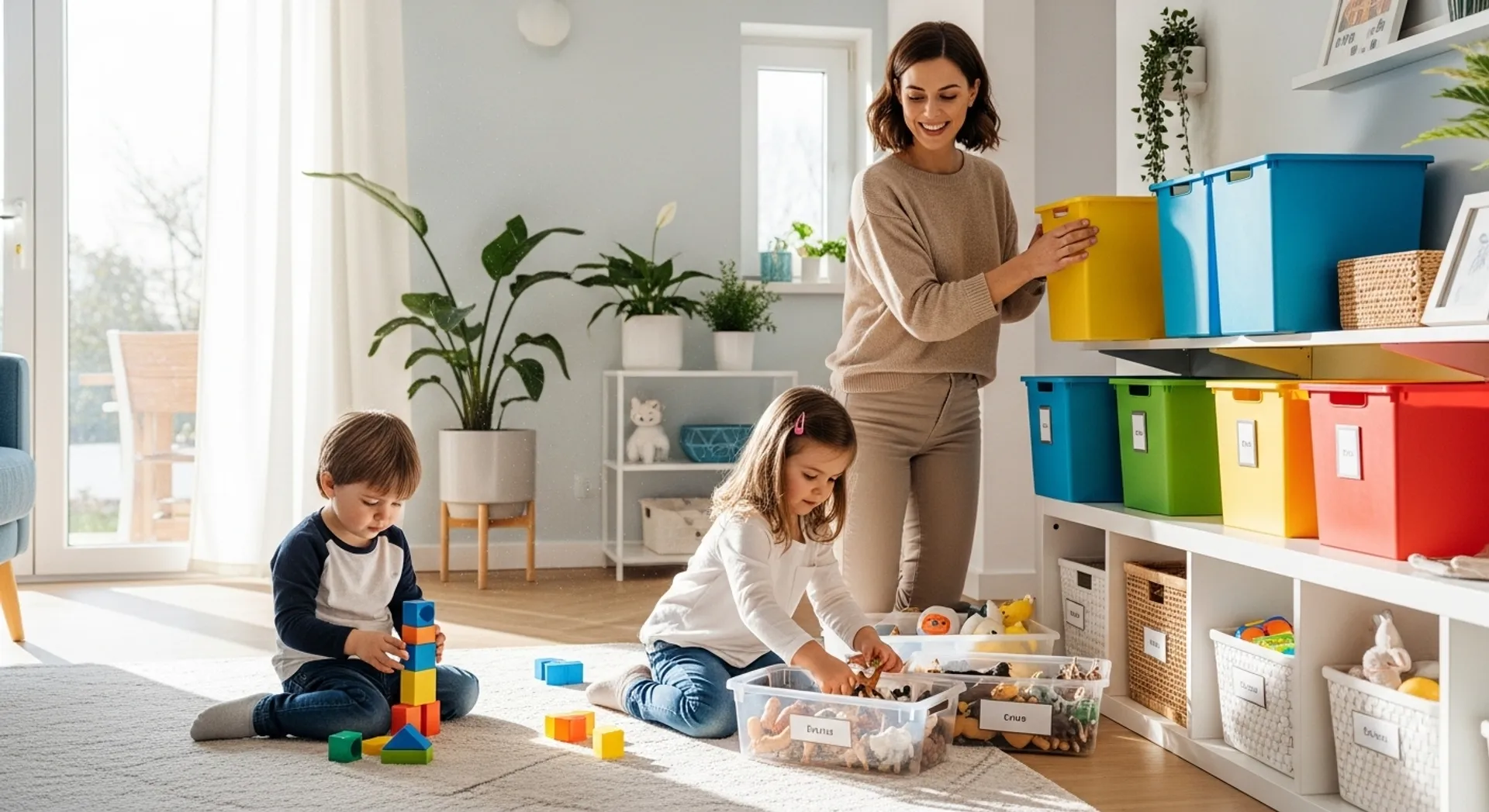

Remember the days when “I’m bored” actually led to something magical? When a cardboard box became a spaceship, a pile of sticks transformed into a fort, and rainy afternoons meant marathon board game sessions with siblings? For many of us, those unstructured moments shaped who we are today. Now, a growing movement of parents is bringing back that kind of childhood — and it is called the analog childhood movement.
If you have noticed your kids reaching for tablets before breakfast or felt that familiar pang of guilt watching them scroll instead of play, you are not alone. Families across the country are pushing back against the digital tide, and the results are nothing short of transformative.
What Is the Analog Childhood Movement?

The analog childhood movement is a parenting approach that prioritizes hands-on, screen-free experiences over digital entertainment. It is not about banning technology entirely — that would be unrealistic in our connected world. Instead, it is about being intentional with how and when our kids interact with screens, while making space for the kind of play that has shaped healthy childhoods for generations.
This trend has been building momentum since psychologist Jonathan Haidt published The Anxious Generation, which sparked a nationwide conversation about how smartphones and social media are affecting our children’s mental health. His research showed that the mental health of adolescents plunged dramatically in the early 2010s — right when smartphones became ubiquitous.
Families embracing this movement are making some surprisingly old-school choices. Some are opting for landlines or basic phones instead of smartphones. Others are trading streaming services for family movie nights with DVD collections or even VHS tapes. Board games are making a massive comeback, and outdoor play is being prioritized over organized digital activities.
Why Moms Are Saying Yes to Less Screen Time
The American Academy of Pediatrics recently released updated guidance that goes beyond simple screen time limits. Their research, covering hundreds of studies over the past 20 years, found that the type of digital content matters just as much as the amount of time spent in front of screens.
Here is what the research tells us about excessive screen use in children:
Impact on Brain Development
MRI scans from the National Institutes of Health reveal that children who spend more than seven hours daily on screens show premature thinning of the brain’s cortex — the area responsible for critical thinking, language development, and decision-making. This is not just about limiting entertainment; it is about protecting developing minds during their most formative years.
Sleep Disruption
Studies consistently show that smartphone and tablet use affects both the quantity and quality of sleep in children. Some kids even wake up in the middle of the night to check texts or social media notifications. Poor sleep in childhood is linked to weakened immune systems, poor diet, obesity, and mental health challenges.
Behavioral Concerns
Research published in the Journal of Child Psychology and Psychiatry found that tweens who spend more time on screens have a higher likelihood of developing disruptive behavior disorders, with social media having an especially strong influence.
The Wait Until 8th Movement: Strength in Numbers

One of the most powerful aspects of the analog childhood trend is the community support emerging around it. The Wait Until 8th pledge has gained remarkable traction, with over 130,000 parents signing a commitment to delay giving their children smartphones until at least the end of eighth grade.
The pledge works by connecting families within the same school and grade level. Once ten families from the same grade sign on, the pledge becomes active, and parents receive contact information for other participating families. This creates a built-in support network and reduces the social pressure that often drives early smartphone adoption.
Interestingly, even tech industry leaders are on board. According to reports, many Silicon Valley executives — including leaders at Google, Apple, Yahoo, and eBay — delay giving their children smartphones until at least age 14. If the people who design these addictive technologies are keeping them away from their own kids, perhaps we should take notice.
15 Screen-Free Activities Your Kids Will Actually Love
Making the shift to an analog childhood does not mean your kids will be bored. In fact, most parents find that after the initial adjustment period, their children become more creative, engaged, and yes — even happier. Here are activities that work for various ages and interests:
For the Creative Kids
Set up an art station with real supplies — paints, clay, colored pencils, and plenty of paper. Let them create without Pinterest-perfect expectations. Messy art is the best art.
Start a family journal or scrapbook. Kids can draw, paste in ticket stubs, and write about adventures. This becomes a treasured keepsake.
Build something together. Whether it is a birdhouse, a bookshelf, or a cardboard castle, working with hands teaches problem-solving and patience.
For the Active Kids
Designate device-free outdoor time every day. Even 30 minutes of unstructured backyard play can make a difference.
Teach them classic games like hopscotch, jump rope, and capture the flag. These games require zero equipment and endless imagination.
Start a family walking or biking routine. Explore your neighborhood together and notice things you have never seen before.
For the Social Kids
Host regular game nights with board games, card games, or puzzles. Some family favorites include Ticket to Ride, Uno, Codenames, and classic chess.
Encourage playdates that are device-free. Set the expectation upfront with other parents.
Start a neighborhood play group where kids of various ages can interact, play, and learn from each other.
For the Curious Kids
Visit your local library regularly. Let your kids explore the stacks and choose their own books without time pressure.
Start a nature journal where kids can sketch plants, insects, and animals they observe outdoors.
Do hands-on science experiments at home. Baking soda volcanoes never get old, and there are hundreds of simple experiments using household items.
For the Whole Family
Cook together. Kids who help prepare meals are more likely to try new foods and develop healthy eating habits.
Read aloud together, even with older kids. Chapter books at bedtime create connection and foster a love of stories.
Establish device-free zones and times — dinner table, car rides, and the first hour after school are great starting points.
How to Start Your Analog Childhood Journey
Transitioning to a more analog lifestyle does not have to happen overnight. In fact, gradual changes tend to stick better than dramatic overhauls. Here is a practical approach:
Week One: Observe and Plan
Spend a week simply noticing your family’s current screen habits without making changes. When do screens come out? What triggers the request for a device? What activities have been replaced by screen time?
Week Two: Create Device-Free Windows
Start with one or two device-free times each day. Mealtimes are an easy place to begin. Have alternatives ready — conversation starters, a simple game, or just the expectation of talking together.
Week Three: Introduce Alternatives

Stock up on engaging alternatives. A drawer of art supplies, a shelf of board games, or a bin of outdoor toys makes it easier to redirect when the screen requests come.
Week Four and Beyond: Expand and Adjust
Gradually extend device-free times and zones. Pay attention to what works for your specific family. Some kids do better with clear rules; others respond to earning screen time after other activities.
Addressing Common Concerns
If you are hesitating about embracing the analog childhood approach, you are not alone. Here are answers to concerns many parents share:
Will My Child Fall Behind Technologically?
Children are remarkably adaptable with technology. A child who learns to use a smartphone at 14 will catch up quickly with peers who started earlier. What they will have that others might not is a foundation of creativity, problem-solving, and face-to-face social skills.
What About School Requirements?
Most screen-free families make exceptions for legitimate educational requirements. The key is distinguishing between school-required technology use and recreational screen time.
How Do I Handle Peer Pressure?
This is where community support matters. Connect with other like-minded families through organizations like Wait Until 8th or local parent groups. When your child knows other kids who also do not have smartphones, the peer pressure diminishes significantly.
Is Not This Just Nostalgia?
While there is certainly a nostalgic element, the analog childhood movement is grounded in solid research about child development, mental health, and the documented effects of excessive screen time. It is not about recreating the past — it is about giving our children what science tells us they need to thrive.
The Bigger Picture: What We Are Really Giving Our Kids
When we choose analog experiences for our children, we are not just limiting screens. We are giving them something far more valuable: the gift of boredom that sparks creativity, the opportunity to develop real-world social skills, and the chance to discover who they are without the constant input of digital content.
Children who grow up with balanced technology exposure tend to have better attention spans, stronger relationships, and more resilience. They learn to entertain themselves, solve problems, and find joy in simple pleasures.
The analog childhood movement is not about perfection. It is about being intentional. It is about making choices that align with what we know about healthy child development, even when those choices swim against the cultural current.
So tonight, maybe put away the tablets and pull out a deck of cards. Take a family walk after dinner. Read an extra chapter at bedtime. These small moments add up to something big — a childhood filled with connection, creativity, and the kind of memories that last a lifetime.
Your kids might resist at first. They might even say they are bored. But remember: boredom is where the magic begins.
For more parenting tips and practical advice for everyday moms, explore our blog where we share real stories from real moms navigating motherhood one day at a time.